How Nutrition Supports Brain Health in Seniors with Dementia
Good nutrition plays an important role in healthy aging. For older adults, balanced meals and adequate hydration can support energy levels, physical strength, mobility, and overall well-being. For seniors living with dementia or Alzheimer’s disease, maintaining healthy eating and drinking habits can become more challenging as memory, behavior, and physical abilities change.
Nutrition does not cure dementia or reverse its progression. However, poor nutrition and dehydration can contribute to concerns such as unintended weight loss, weakness, fatigue, and changes in behavior. That makes thoughtful, individualized nutrition support an important part of a broader dementia-care plan.
1. Why Nutrition Matters for Seniors with Dementia
Regular, balanced meals provide the calories, protein, vitamins, minerals, and other nutrients older adults need to support their health. Getting appropriate nutrition can help seniors maintain strength and mobility, which may make it easier to participate in everyday activities and enjoy a greater sense of independence.
For someone with dementia, nutritional needs may also change over time. Appetite, food preferences, medications, medical conditions, chewing or swallowing abilities, and the level of assistance needed during meals can all affect eating habits.
There is no single “dementia diet” that is right for every person. Instead, families and caregivers should focus on individualized nutritional support that accounts for each senior’s health needs, abilities, routines, and preferences.
2. Nutrients and Foods That Support Overall Brain Health
A balanced, heart-healthy eating pattern can support overall health, including brain health. Depending on an individual’s dietary needs and recommendations from healthcare professionals, meals may include:
- Fruits and vegetables: A variety of produce can provide important vitamins, minerals, fiber, and other nutrients.
- Whole grains: Foods such as oatmeal, brown rice, and whole-grain breads can provide fiber and sustained energy.
- Lean proteins: Poultry, eggs, beans, lentils, and other protein sources can help support muscle maintenance and strength.
- Fish and heart-healthy fats: Fish, nuts, seeds, and certain plant oils can be included as part of a balanced eating pattern when appropriate.
- Familiar and preferred foods: Meals should also reflect a senior’s medical requirements, cultural traditions, personal preferences, and lifelong eating habits.
Rather than relying on a particular “brain food,” the goal is to provide varied, nourishing meals that contribute to overall wellness. Dietary recommendations should also take existing medical conditions and guidance from the senior’s healthcare team into account.
3. The Importance of Hydration
Hydration deserves special attention in dementia care. A person with dementia may forget to drink, have difficulty communicating thirst, or no longer recognize the sensation of being thirsty.
Caregivers can encourage hydration by offering beverages regularly throughout the day rather than waiting for the person to request a drink. Keeping an easy-to-see cup or bottle nearby may also provide a useful visual reminder.
Water-rich foods can contribute to fluid intake as well. Depending on dietary needs and swallowing ability, options may include fruits, vegetables, soups, yogurt, or other foods with a high water content.
Caregivers should pay attention to meaningful changes in fluid intake or signs that drinking has become difficult. If dehydration or problems with chewing or swallowing are suspected, contact an appropriate healthcare professional for guidance.
4. Common Eating Challenges with Dementia
Dementia can affect eating in many different ways, and challenges may change as the condition progresses. Common concerns can include:
- Reduced appetite or interest in food
- Difficulty using forks, spoons, or other utensils
- Forgetting to eat or believing a meal has already been eaten
- Changes in food preferences or refusal of previously enjoyed foods
- Difficulty chewing or swallowing
- Becoming distracted, restless, or agitated during meals
These behaviors should not automatically be treated as a lack of cooperation. They may reflect changes in memory, perception, coordination, communication, or physical ability.
Understanding what is making a meal difficult can help caregivers adapt the experience to the individual rather than expecting the individual to adapt to a complicated dining environment.
5. Ways Caregivers Can Make Mealtimes Easier
Small adjustments can make meals more comfortable and manageable for a senior with dementia.
Create a calm, familiar environment. Reducing unnecessary noise and distractions may make it easier for the person to focus on eating.
Offer simple choices. Instead of presenting many options at once, caregivers can offer one or two choices to reduce confusion while preserving the senior’s ability to express preferences.
Consider easy-to-handle foods. When utensils become difficult to use, appropriate foods that can be safely handled by hand may allow a senior to continue eating more independently.
Maintain consistent mealtimes. Familiar routines can provide structure and make eating a more predictable part of the day.
Encourage independence. Allow seniors to do as much as they comfortably and safely can for themselves while providing assistance when needed.
Watch for changes. Significant changes in weight, appetite, eating habits, or chewing and swallowing ability should be monitored and discussed with appropriate healthcare professionals.
The right approach may change over time, which is why patience, observation, and personalized assistance are so important.
6. How Memory Care Communities Support Healthy Eating
As dementia progresses, managing meals can become increasingly demanding for families. A dedicated memory care community can provide an environment where nutrition is supported alongside other aspects of daily life.
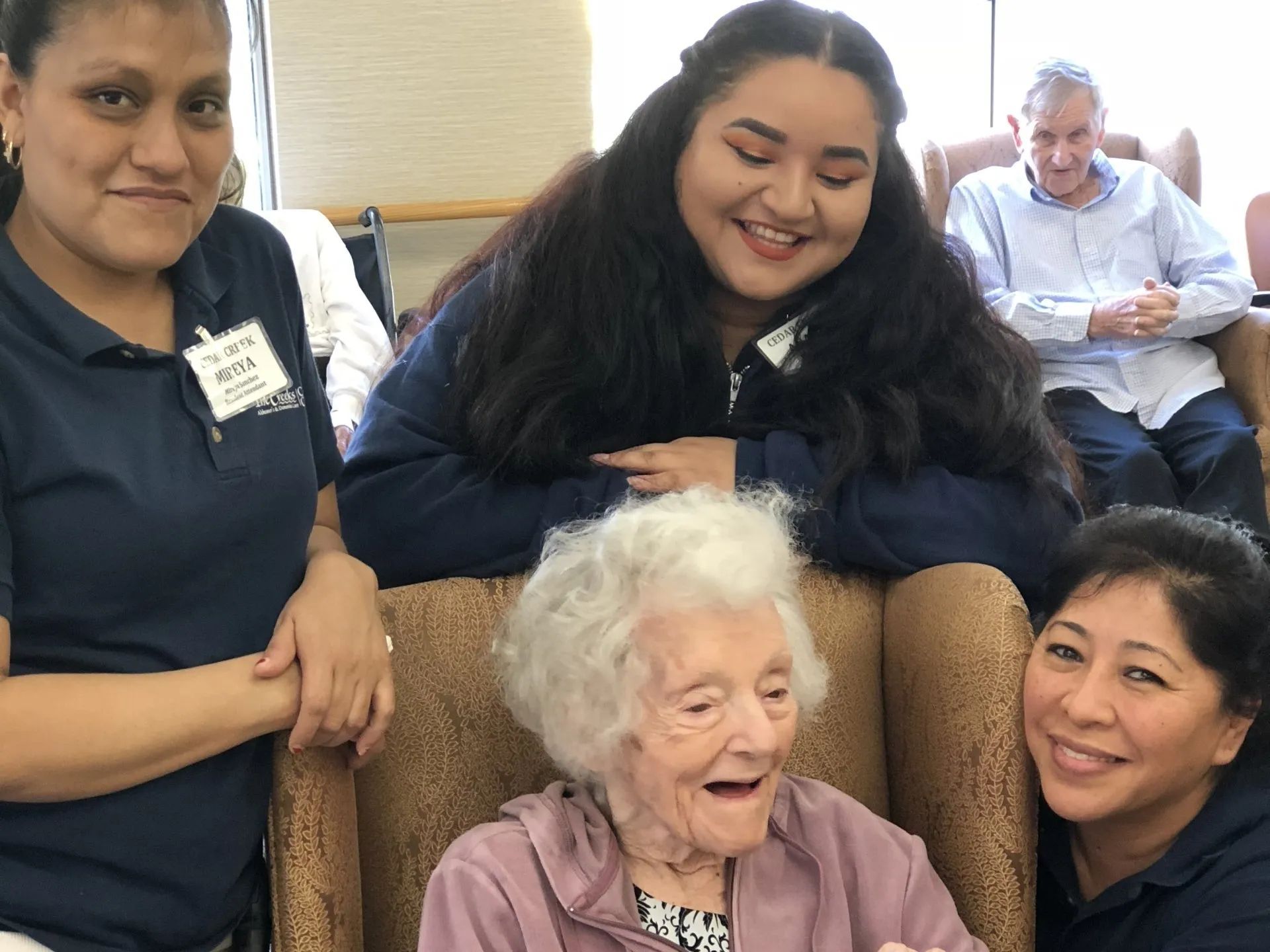
At Willow Creek Memory Care, residents have access to nutritious meals as part of a broader approach to personalized care. Twenty-four-hour support allows assistance to be adapted to each resident’s individual needs and abilities, including help with daily routines when needed.
Familiar routines can make the day more predictable for people living with memory loss, while social dining opportunities can make meals an engaging part of community life. Activities and opportunities for social connection can further support residents’ overall well-being.
Most importantly, memory care is not a one-size-fits-all service. The level of assistance a resident needs at meals or throughout the day may differ from another resident’s needs and can change over time. Personalized support helps caregivers respond to those differences while encouraging residents to maintain their abilities and independence whenever possible.
Nutrition Is One Part of Personalized Dementia Care
Healthy eating and hydration are important components of overall wellness for seniors with dementia, but they are only part of the picture. Effective dementia care also considers safety, daily routines, social engagement, personal preferences, changing abilities, and the appropriate level of assistance for each individual.
For families, having additional support can help ensure that these everyday needs receive consistent attention as a loved one’s condition changes.
Does your loved one need additional support with meals, daily routines, or memory-related challenges? Schedule a visit to Willow Creek Memory Care to learn more about our personalized memory care for Castro Valley and surrounding communities.